🎉 Waltz reaches $50M💰 in funding to support LATAM growth 🎉 Read the full story here

Moving trucks don't lie.
Every year, U-Haul publishes its Growth Index, a dataset built from over 2.5 million one-way truck, trailer, and U-Box transactions across all 50 states. It tracks where people are actually going. Not where economists predict they might go, not where developers are building, and not where a glossy magazine says is "up and coming." Just real people, renting real trucks, and moving their real lives from one place to another.
For foreign nationals investing in U.S. real estate from abroad, this kind of ground-level signal is invaluable. It tells you where rental demand is forming before it gets priced in. And the 2025 data, released in early 2026, has some clear messages for investors paying attention.
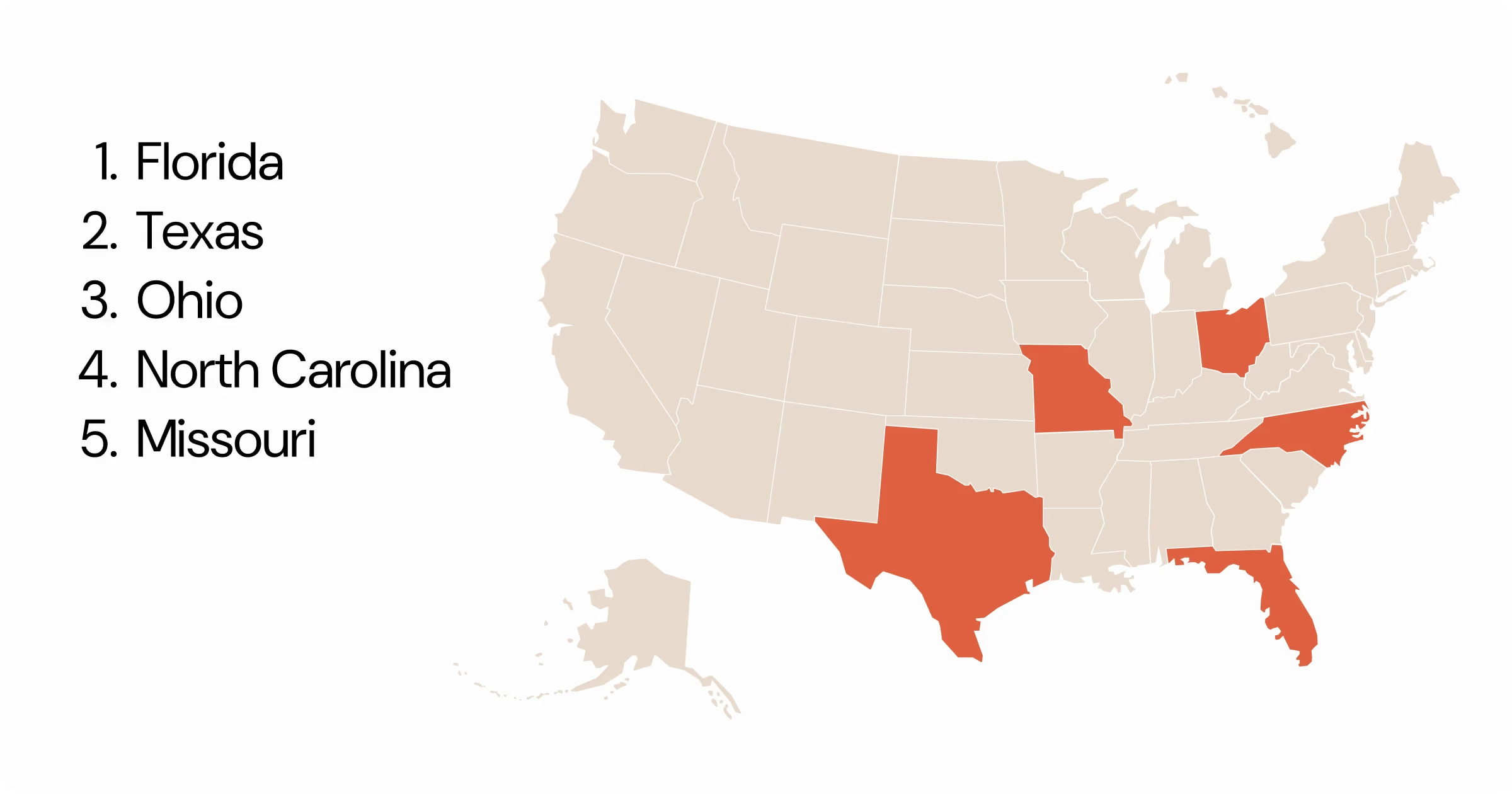
Texas reclaimed the number one spot in 2025 after South Carolina briefly held it in 2024, making it the seventh time in ten years that Texas has led the Growth Index. Florida came in second, its highest ranking in years, and has never fallen below fourth since U-Haul began tracking state rankings a decade ago. North Carolina, Tennessee, and South Carolina round out a top five that is identical in composition to 2023 and 2024, just shuffled in order.
For investors, this consistency is not boring. It’s a green light. These states are not experiencing a temporary spike driven by a single employer or a pandemic-era trend. They are structurally attractive places to live: warm climates, business-friendly policies, no state income tax in several cases, and economies diversified enough to weather downturns. When the same states dominate the top of a migration index for three or more consecutive years, it means the fundamentals are real and durable.
That is exactly what you want when you are financing a rental property from another country and cannot be on the ground every day.
The stability at the top is one story. The volatility in the middle is another, and that is where the opportunity lives for investors who are willing to look a little further down the list.
Some states made extraordinary jumps in 2025. Oregon climbed more than 20 positions after spending years as a net-loss state. Colorado gained nearly 20 spots, with Denver reversing its out-migration trend from 2024. Mississippi and Nevada each climbed significantly as well. Meanwhile, Ohio fell nearly 30 spots, and Virginia and Indiana both dropped substantially after strong 2024 performances.
What does this tell us?
That migration patterns are not static, and that states outside the established top five can shift quickly. For investors who got into Colorado or Oregon-based markets twelve months ago, they may already be looking at meaningfully stronger rental demand than when they bought. For those who chased Ohio's 2024 momentum without deeper due diligence, the 2025 data is a reminder that a single year of strong migration does not always compound.
The practical lesson: use the Growth Index as a shortlisting tool, not a final decision. It tells you where to look. It does not tell you whether a specific submarket has the supply constraints, rent-to-price ratios, and landlord-friendly laws to make your deal work. That research still has to happen.
Texas: Texas has reclaimed the top spot for good reason. Dallas-Fort Worth retained its title as the number one U-Haul growth metro for the second straight year, and the state's diversified economy across tech, energy, and healthcare makes it resilient across market cycles. No state income tax, a business-friendly environment, and a housing market that is large and liquid enough to absorb foreign investor capital at scale.
Florida: Florida saw arrivals account for more than half of all one-way U-Haul traffic in 2025, and the state's growth cities are stacking up. Ocala held its top city ranking for the third time in four years, with North Port, Kissimmee, and Clermont also ranking highly. For foreign investors, Florida's tourism economy creates durable short-term rental demand, while its growing tech corridors in Miami and Tampa underpin long-term appreciation.
North Carolina: North Carolina has been in the top five for three consecutive years, which is the kind of consistency that matters. Cities like Garner are appearing on the growth list for the first time, signaling that demand is spreading beyond the established Raleigh-Durham corridor. The state offers a lower cost of living relative to coastal peers and strong rental demand from a growing base of young professionals and retirees alike.
Tennessee: Tennessee continues to benefit from Nashville's dual identity as both a tourism powerhouse and a growing healthcare and manufacturing hub. No state income tax, landlord-friendly laws, and a relatively affordable entry point relative to Florida and Texas make it one of the most compelling markets for foreign investors building a first or second U.S. position.
South Carolina slid from its 2024 top spot but remains firmly in the top five. Myrtle Beach continues to rank as a top growth city, and the state's affordable entry point and coastal tourism economy offer genuine cash flow potential for buy-and-hold investors.
Thinking about where the 2025 top five was three years ago is a useful exercise. The same logic applies to today's fast-moving risers.
Oregon, with its dramatic jump from a net-loss to a net-gain state in a single year, deserves a serious look. Colorado and Arizona, both now firmly in or near the top ten, offer urban markets with strong employment bases and improving fundamentals. Mississippi and Nevada, while smaller markets, are showing the kind of momentum that tends to attract investor attention and price increases within two to three years.
The caveat is real: faster-moving markets require deeper due diligence. Entry price alone is not a thesis. Before committing to any state outside the established top five, a serious investor should apply at least three filters: the local tax environment and landlord laws, the depth of the submarket beyond the one or two headline cities, and the property's own rent-to-price ratio independent of the macro migration trend.
The U-Haul Growth Index was built to track domestic migration. But for foreign nationals investing remotely, its implications are direct: the states where Americans want to live are the states where your rental property will find tenants.
Investing from abroad already adds layers of complexity. Coordinating transactions across time zones, managing currency exchange, navigating a financing system that was not built with international buyers in mind. Choosing a market with durable, data-backed demand removes at least one variable from the equation. It’s a lot easier to find and keep good tenants in a market where people are actively choosing to move than in one where the population trend is flat or declining.
The good news is that the markets at the top of the 2025 Growth Index are precisely the states where Waltz has helped foreign nationals close deals. The data and the investor experience point in the same direction.
Read more: Customer Success Stories
The rankings tell you where momentum is. They do not tell you which street to buy on, what price to pay, or whether a given property will cash flow after insurance and taxes. That work still requires going deeper: looking at city-level vacancy rates, employment base concentration, local price-to-rent ratios, and the specific submarket dynamics that separate a good deal from a mediocre one.
Once you have done that work and identified your market, the next question is financing. As a foreign national, you do not need a U.S. credit score or Social Security number to get a mortgage. DSCR loans evaluate the income potential of the property itself, not your personal financial history, which means the analysis you have already done on rental demand feeds directly into your loan qualification.
The markets are telling you where to look. The rest is execution.
Explore loan options with Waltz.

Fill out a quick form and we'll get back to you shortly.


