🎉 Waltz reaches $50M💰 in funding to support LATAM growth 🎉 Read the full story here

Florida has long been one of the most attractive U.S. real estate markets for international investors. From Miami's global appeal to Orlando's population growth and Tampa Bay's diverse economy, the state offers several markets with different investment profiles.
For foreign investors, that diversity is particularly important. The best place to invest in Florida depends on your budget, investment strategy, target rental market, financing options, and tolerance for costs such as insurance, property taxes, and HOA fees.
According to Florida Realtors®, international buyers purchased $10.4 billion worth of residential real estate in Florida between August 2024 and July 2025, up from $7.1 billion the previous year. Miami-Fort Lauderdale-West Palm Beach accounted for 45% of international purchases, followed by Orlando-Kissimmee-Sanford at 13% and Tampa-St. Petersburg-Clearwater at 7%.
In 2026, the three markets continue to attract substantial international attention. Miami ranked first among U.S. markets for international online home-shopping activity in the first quarter of 2026, while Orlando ranked fourth and Tampa fifth.
For investors considering buying a rental property in Florida, the key question is therefore not simply “Is Florida a good place to invest?”. This guide takes a closer look at the three markets international investors should know: Miami, Orlando, and Tampa Bay.
Florida's appeal goes beyond its warm climate and beaches. Several economic and demographic factors have helped make the state a major destination for both domestic and international real estate investors.
Florida has consistently ranked among the top U.S. destinations for international real estate buyers.
International buyers are particularly active in South Florida, Central Florida, and the Tampa Bay region. In 2025, Canada, Colombia, Brazil, Argentina, and the United Kingdom were among Florida's leading sources of international buyers. Brazil alone accounted for 7% of international buyers and approximately $762 million in purchase volume.
This established international buyer base can also benefit investors who want exposure to markets with strong global visibility.
Population growth is another important factor when evaluating rental property investments.
People continue to move to Florida for employment opportunities, lifestyle considerations, warmer weather, and tax advantages. Orlando, for example, added nearly 38,000 residents to its metropolitan area in 2025, bringing the population to approximately 2.96 million.
Population growth can support long-term housing demand by increasing the number of households looking for homes to rent or buy.
Florida does not impose a state personal income tax, which is one of the factors that contributes to its appeal for residents and investors.
However, foreign investors should not interpret this as meaning that Florida real estate income is tax-free. Rental income, property taxes, federal taxes, FIRPTA considerations, insurance costs, and the investor's home-country tax obligations can all affect the economics of an investment.
For that reason, international investors should evaluate the complete tax picture before purchasing a property.
Florida offers opportunities across different rental strategies. Depending on the location and property, investors may consider:
Miami, Orlando, and Tampa Bay each have different demand drivers, which means investors can choose a market based on their preferred strategy rather than relying on a one-size-fits-all approach.
Miami is arguably Florida's most internationally recognized real estate market. It is a global city with strong connections to Latin America, Europe, and other international markets. For foreign investors, Miami combines international demand, tourism, rental opportunities, and a large and diverse real estate market.
According to the MIAMI Association of REALTORS® report:
Miami also represented approximately 45% of Florida's international purchases in 2025, making South Florida by far the state's largest international buyer market.
.jpg)
Miami's greatest strength is its combination of international demand and multiple sources of rental demand. The city attracts:
According to the MIAMI Association of REALTORS®, 71% of South Florida international buyers purchased properties for rental income, vacation use, or both in 2025. This makes Miami particularly interesting for investors who want exposure to a globally recognized market and are comfortable evaluating properties at higher price points.
Miami is not a market where investors should evaluate properties based on appreciation potential alone. Purchase price, insurance, property taxes, HOA fees, rental regulations, maintenance costs, and expected rental income can materially affect returns.
For international investors, this means the right property is often more important than simply choosing the right city. A property with strong rental demand but excessive HOA fees or insurance costs may produce a very different return than a similar property in another neighborhood.
Start investing in Miami.
If Miami is Florida's international gateway, Orlando offers a different investment proposition.
The Orlando metropolitan area combines population growth, tourism, employment, and a large residential housing market.
The Orlando-Kissimmee-Sanford metropolitan area reached approximately 2.96 million residents in 2025, adding 37,690 residents in one year.
The Orlando Regional REALTOR® Association reported a $385,000 median home price in 2025. There were also 26,721 residential sales during the year. At the same time, average monthly inventory increased substantially, giving buyers more property selection and negotiating opportunities.
.jpg)
One of Orlando's biggest advantages is the diversity of its housing demand. The region attracts:
The combination of tourism and population growth creates multiple potential sources of rental demand. However, investors should distinguish between tourist-driven rental demand and long-term residential demand. The economics, operating costs, regulations, and management requirements can be very different.
Compared with some of South Florida's higher-priced markets, Orlando can offer investors a lower entry point.
The 2025 median home price of $385,000 provides a useful benchmark when evaluating the market, although actual investment properties can vary significantly depending on neighborhood, property type, and proximity to major attractions and employment centers.
For investors looking for a balance between price, population growth, and rental demand, Orlando deserves serious consideration.
Orlando investors should pay close attention to:
A property can look attractive based on its purchase price but produce weaker returns if operating costs are underestimated.
Tampa Bay offers another distinct investment profile. The broader Tampa Bay MSA includes Hillsborough, Pinellas, Pasco, and Hernando counties, creating a large and diverse market that stretches beyond the city of Tampa itself.
The region includes Tampa, St. Petersburg, Clearwater, and surrounding communities, giving investors a broad range of property types and price points to evaluate.
According to Florida Realtors®, Tampa Bay market data shows:
Importantly, the 2025 market showed a combination of increased transaction activity and lower prices. Single-family closed sales increased 1.6%, while the median single-family price declined 3.0%. That combination can create a more negotiated environment for buyers.
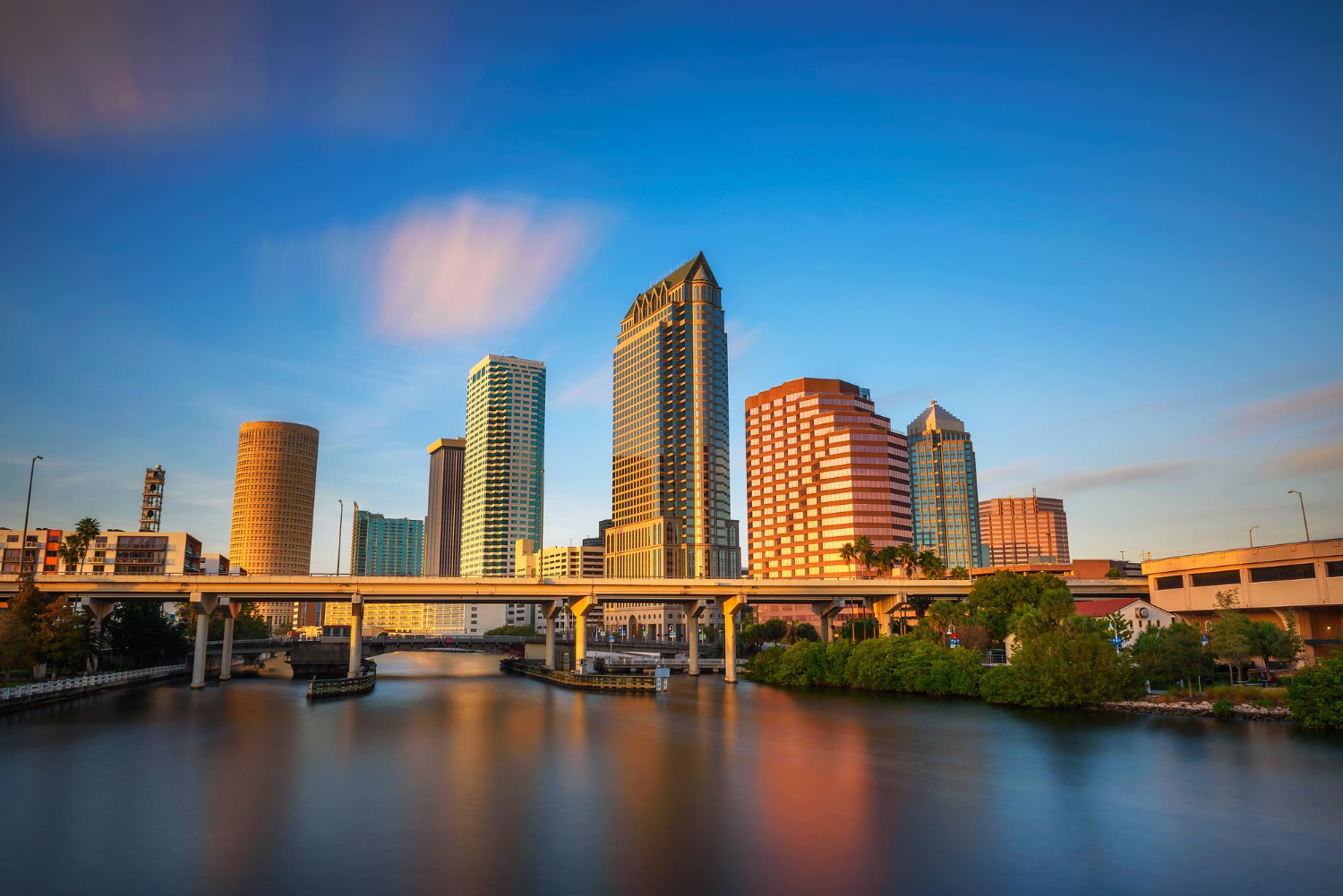
Tampa Bay benefits from a diverse regional economy, population growth, coastal lifestyle, and a broad range of communities. Investors can evaluate opportunities in:
This geographic diversity gives investors more flexibility when searching for properties that meet specific cash-flow or price requirements.
St. Petersburg can be particularly interesting for investors who want exposure to the Tampa Bay region while looking beyond Tampa itself. The city combines waterfront living, tourism, a revitalized downtown, arts and cultural attractions, and a growing technology sector.
Insurance and climate-related costs are particularly important when underwriting Florida properties. Investors should account for:
These expenses can significantly influence the actual cash flow of a rental property.
There is no universal answer. The best Florida real estate market depends on what you are trying to accomplish.
Miami may make sense if you prioritize:
Orlando may make sense if you prioritize:
Tampa Bay may make sense if you prioritize:
The important point is that Florida is not one real estate market. Miami, Orlando, and Tampa Bay can behave differently even when statewide trends point in the same direction.
Buying Florida real estate as a foreign investor is possible, but the process involves more than simply finding a property. International investors should understand the legal, financial, tax, and operational requirements before making an offer.
Foreign investors can purchase real estate in the United States without having a U.S. visa or being a U.S. resident.
However, owning property and qualifying for financing are separate matters. Lenders may have specific requirements for foreign nationals, including documentation related to identity, income, assets, and the property being financed.
Many foreign investors use a U.S. Limited Liability Company (LLC) to hold investment property. An LLC can provide a recognized business structure for owning and managing rental property, but the appropriate structure depends on the investor's circumstances and tax situation.
International investors should consult qualified legal and tax professionals before deciding how to structure ownership.
Traditional mortgages often rely heavily on the borrower's personal income, employment, and credit history.
A DSCR loan, or Debt Service Coverage Ratio loan, takes a different approach. Instead of focusing primarily on the investor's personal income, DSCR underwriting evaluates the property's ability to generate enough rental income to cover its debt obligations.
A simplified formula is:
DSCR = Rental Income ÷ Total Monthly Debt Service
The debt-service calculation can include principal and interest, property taxes, insurance, and HOA expenses, depending on the lender's methodology.
This structure can be particularly relevant for international investors who do not have a U.S. credit history or U.S. employment income.
Buying a rental property entirely with cash is not the only option.
For eligible investors, financing can allow them to use leverage while keeping more capital available for additional investments or other financial needs.
Waltz currently offers financing of up to 70% LTV on eligible residential rental properties, meaning qualified investors may be able to finance up to 70% of the property's value. Loan amounts can range from $100,000 to $1 million per property, subject to applicable requirements.
The right amount of leverage depends on the property's expected income, financing costs, cash reserves, and the investor's overall strategy.
Florida remains one of the most important U.S. real estate markets for international investors, but investors should look beyond the state's reputation.
Miami, Orlando, and Tampa Bay each offer a different investment proposition. Miami stands out for its global appeal, international buyer demand, and diverse rental market. Orlando combines population growth, tourism, and a comparatively lower median home price. Tampa Bay offers a broad regional market with multiple communities, a diverse housing stock, and a more negotiable market environment.
For foreign investors, the best opportunity is not necessarily the city with the highest appreciation or the most famous name. It is the property where purchase price, rental income, financing, taxes, insurance, operating expenses, and long-term demand come together to create a compelling investment case.
If you're considering buying a rental property in Florida from outside the United States, understanding the market is only the beginning. The next step is determining how much you can invest, which properties fit your strategy, and how financing can help you build your U.S. real estate portfolio.
Waltz provides support beyond its digital platform through its Miami office, where dedicated advisors are available to assist international investors and answer questions throughout the investment process.
Ready to explore Florida real estate investment opportunities? Start your investment journey with Waltz today.

Fill out a quick form and we'll get back to you shortly.


