🎉 Waltz reaches $50M💰 in funding to support LATAM growth 🎉 Read the full story here

Multi-family properties are among the most powerful tools for generating rental income. By earning income from multiple tenants under one roof, investors can reduce risk, stabilize cash flow, and scale faster than with single-family houses.
For foreign investors, financing multi-family properties has traditionally been a challenge. U.S. lenders often require extensive documentation, U.S. credit history, and larger down payments, making the process complex and sometimes prohibitive.
This article will break down the benefits of multi-family investing and provide guidance on how international investors can navigate financing to unlock the potential of these properties.
A small multi-family property is a residential building with two to four separate units, such as a duplex (2 units), triplex (3 units), or fourplex (4 units). Multi-family homes strike a balance between accessibility and scalability. They generate more rental income than single-family homes, yet remain simpler and less expensive to manage than larger options such as apartment complexes. For investors, this makes them an ideal entry point into U.S. real estate.
Learn more: Breaking Down the 4 Most Common Residential Rental Property Types
Multi-family properties are a cornerstone of income-focused real estate investing. They offer built-in diversification and higher earning potential, making them especially attractive for investors looking to scale efficiently.
Unlike a single-family rental, a duplex or triplex continues to generate income even if one tenant moves out. Multiple rental streams help smooth out vacancy periods and protect overall cash flow.
Each unit in a multi-family property adds to the overall rental income, allowing these homes to generate significantly higher cash flow than single-family rentals. This additional income helps cover mortgage payments, property expenses, and reserves, reducing financial strain during vacancies.
With multiple units paying down the same mortgage, equity accumulates faster. Investors can later refinance or expand their portfolios using accumulated equity from one property to fund another, compounding growth over time.
For foreign nationals, these benefits are amplified when paired with a financing model that removes the need for U.S. credit or income verification, precisely what Waltz provides.
A debt-service-coverage-ratio (DSCR) loan is a type of financing that evaluates a property’s ability to generate enough income to cover its mortgage and expenses. Multi-family properties are particularly well-suited for DSCR loans because each unit contributes to the total rental income, creating multiple income streams. This higher overall cash flow makes it easier for the property to cover debt obligations, aligning perfectly with the DSCR model and making financing more accessible for investors.
Since qualification is based on the property’s ability to cover its debt, international investors can secure financing without U.S. credit history or income verification so long as the property cash flows. The calculation is simple:
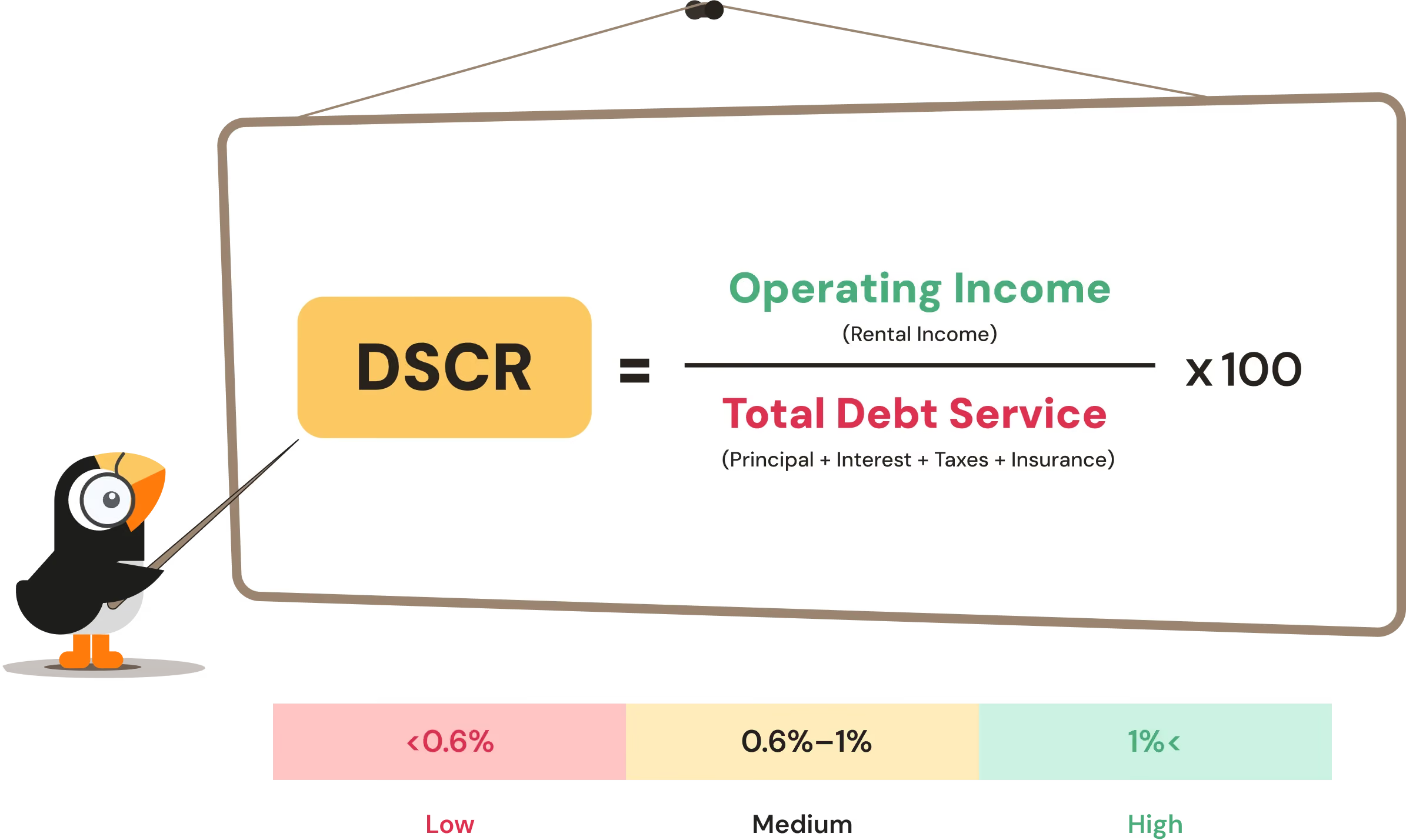
DSCR = Net Operating Income ÷ Total Debt Service
To qualify for a DSCR loan, lenders assess the property’s income rather than the borrower’s personal finances. They calculate net operating income (NOI) by subtracting operating expenses from rental income, then divide it by total debt service, which includes mortgage principal, interest, taxes, and insurance.
A DSCR above 1.0 indicates the property generates enough income to cover its debt, with many lenders preferring 1.2 or higher for added stability.
Qualifying for a DSCR loan simplifies the loan application process for foreign nationals. Rather than rely on a borrower’s personal debt-to-income (DTI) ratio, it focuses on the cash flow of the asset. From a lender perspective, this makes it easier for foreign nationals to qualify.
Even with DSCR loans, many lenders struggle to evaluate foreign nationals as borrowers. They often assume that without U.S. income or a credit score, applicants aren’t qualified and sadly results in unnecessary rejections. In reality, most international buyers don’t have these, but it doesn't mean you aren’t qualified. That’s where Waltz steps in with a foreign-friendly lending approach.
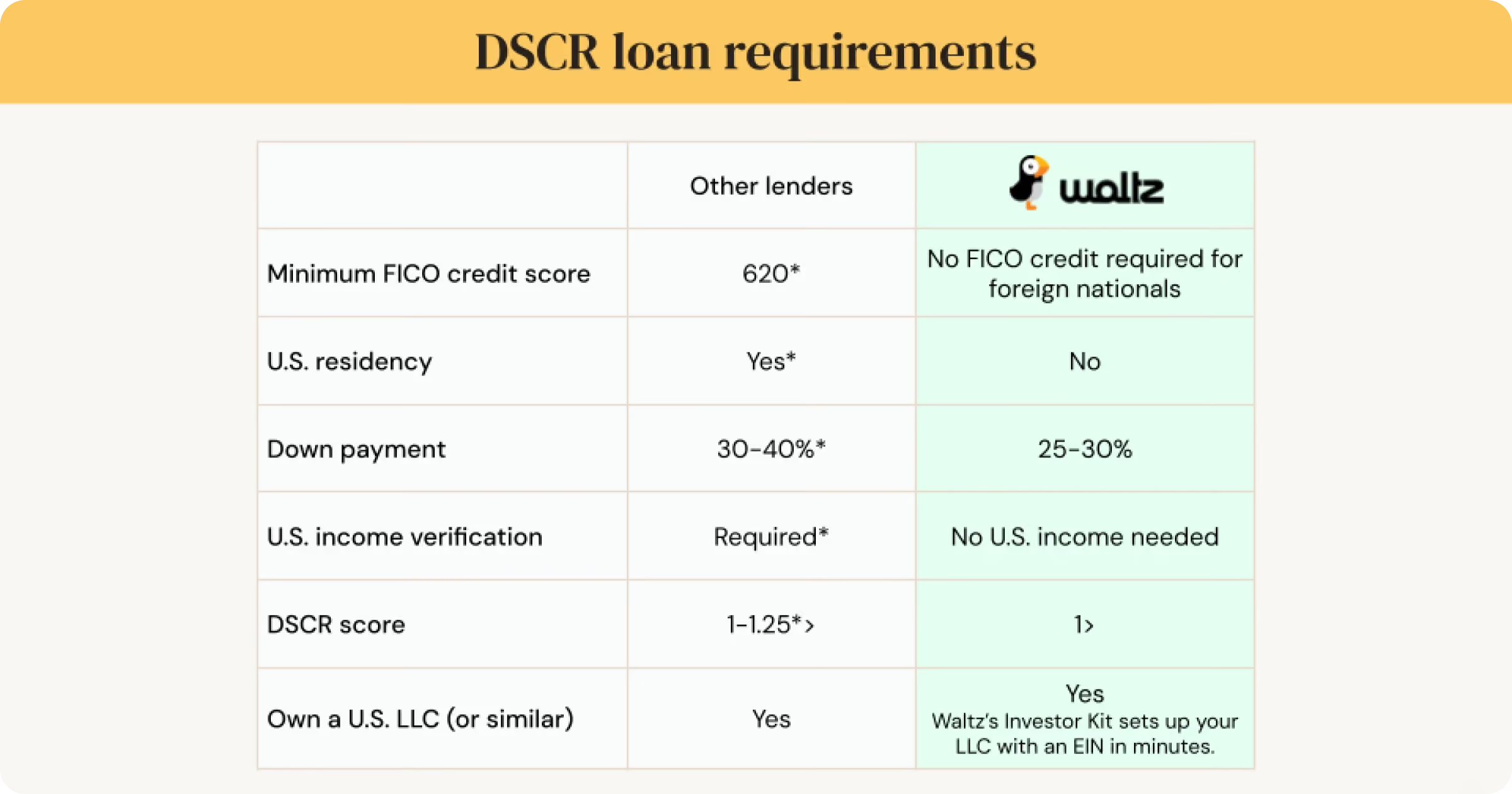
Waltz offers loan amounts from $100,000 to $1 million, with up to 70% loan-to-value (LTV). This flexibility enables investors to scale portfolios without the documentation or credit history many lenders typically demand.
Refinancing is one of the most effective ways to grow or optimize a real estate portfolio. For multi-family investors, it can free up equity for additional purchases, reduce monthly payments, or convert short-term debt into long-term stability.
DSCR mortgages are not just for new property purchases. They can also be used for refinancing. Waltz supports both rate-and-term and cash-out refinancing options, helping investors unlock the full potential of their portfolio while leveraging the property’s cash flow rather than personal income.
A rate-and-term refinance is designed to improve the terms of your mortgage. This type of refinance allows you to adjust your loan, such as lowering the interest rate or extending the repayment period, without changing the total loan amount. It is primarily aimed at improving cash flow or making monthly payments more manageable.
For foreign nationals, this can be a powerful way to optimize a property’s DSCR while keeping the process straightforward. While lower rates can reduce monthly payments, there are standard closing costs to consider, including application fees, appraisal costs, and title insurance. A rate-and-term refinance also offers the opportunity to shorten your loan duration and pay off the mortgage faster if desired.
A cash-out refinance lets investors access the equity built up in a property. With this option, you borrow more than your current mortgage balance and receive the difference in cash at closing. The main advantage is immediate access to cash that can be reinvested to grow or optimize your portfolio. This cash can be used for a variety of purposes, such as making property improvements, consolidating debt, or funding additional real estate investments.
Learn more: How DSCR Cash-Out Refinancing Works
Multi-family properties offer built-in advantages for income-focused investors. With multiple units generating rent under one roof, cash flow is more stable, vacancies are less impactful, and equity grows faster than with single-family homes. DSCR financing amplifies these benefits by aligning repayment with the property’s performance, making it easier to manage debt and expand a portfolio. For foreign nationals, this combination of multi-family real estate and property-based financing creates a scalable, resilient path to long-term growth.
Whether you’re purchasing your first duplex or expanding, Waltz provides the structure, financing, and speed to make it happen all remotely.

Fill out a quick form and we'll get back to you shortly.


